
How to Build a Real Online Business from Home
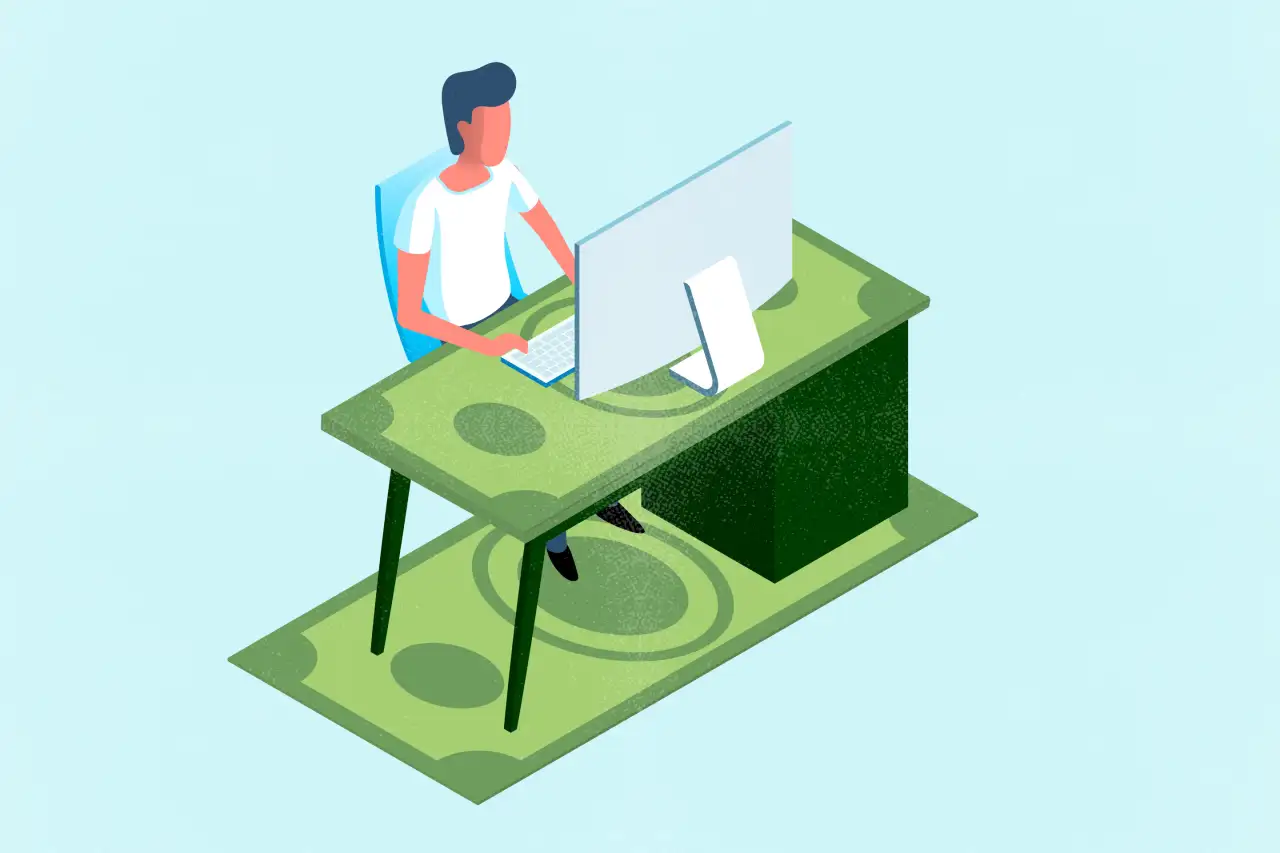
Your kitchen table has seen a lot: spilled coffee, homework disasters, late-night arguments over whose turn it is to do the dishes. It has probably never seen a paycheck materialize from the Wi-Fi signal hovering above it—yet.
Making money from home online isn’t a fantasy reserved for influencers with ring lights and drop-shipping courses. It’s a legitimate, increasingly common way to earn a living. But the gap between “I want to work from home” and “I am making money from home” is narrower than most people think—and wider than the gurus would have you believe. It’s not about overnight millions. It’s about building a small, sustainable engine that runs on your skills, your schedule, and your living room.
Here is how to start, without falling for the myth of passive income that requires zero work.
How to Build a Real Online Business from Home
1. Pick a Lane That Actually Fits You
There are roughly three neighborhoods in the online home-business world. Most people fail because they pick the one that sounds easiest, not the one that fits their life.
The Service Lane. You sell a skill: writing, graphic design, bookkeeping, virtual assisting, social media management, tutoring, consulting. The barrier to entry is low because you already know how to do the work. The hard part is finding clients and learning to price yourself like a business, not a favor.
The Product Lane. You create something digital once and sell it repeatedly: templates, printables, e-books, stock photography, online courses, software. You do the work upfront; the sales happen while you sleep. The catch? You need an audience or a way to get in front of one.
The Audience Lane. You build a following on YouTube, a newsletter, a podcast, or a niche blog, then monetize through sponsorships, affiliate links, or your own offerings. This is the slowest to pay off, but it builds an asset you own.
Ask yourself: What am I good at that people already ask me for help with? That intersection—your skill plus a problem someone will pay to solve—is your starting point.
2. Validate Before You Build
A common mistake is spending three months building a website, designing a logo, and ordering business cards before confirming that anyone wants to pay for what you’re offering.
Before you incorporate anything, try to get one “yes.”
If you want to be a freelance writer, email five businesses with a specific pitch. If you want to sell digital planners, post a mockup in a Facebook group and ask if anyone would buy it. If you want to consult on Etsy shop SEO, offer one session at a discount in exchange for a testimonial.
That first dollar—or even that first enthusiastic “yes”—is worth more than a perfect website. It proves the demand exists.
3. Your First 30 Days: A Reality-Based Roadmap
You don’t need a garage, a warehouse, or investors. You need a laptop, an internet connection, and consistency.
Week 1: Clarify the offer. Write down exactly what you sell, who it’s for, and what problem it solves. Example: “I write email newsletters for independent dentists who want to remind patients to book cleanings without sounding robotic.”
Week 2: Build a minimal presence. A simple landing page, a LinkedIn profile, or an Instagram account is enough. You’re not trying to look like Apple; you’re trying to look credible enough that a stranger will click “contact.”
Week 3: Outreach. Send 10 personalized messages. Comment thoughtfully on five posts in your niche. Post about your service once. Most people will ignore you. One person might reply. That’s how it starts.
Week 4: Deliver and collect proof. Do excellent work for your first customer—even if it’s at a reduced rate. Ask for a testimonial. That testimonial becomes your next marketing asset.
4. The Hidden Curriculum: What No One Tells You
Working from home sounds like freedom until your couch becomes your cubicle and your bedroom becomes your boardroom. The lack of boundaries can burn you out faster than a commute ever did.
Set a start time and an end time. Close the laptop. Go outside. Treat your home business like a real job, not a hobby you do in your pajamas.
Also, expect the feast-or-famine rhythm. Some months you’ll be turning work away; other months you’ll wonder if anyone on the internet remembers you exist. That’s normal. The goal is to smooth out the peaks and valleys by building recurring revenue—retainer clients, subscriptions, or evergreen products—so you’re not always chasing the next dollar.
5. Tools You Actually Need (and Ones You Don’t)
You do not need a $2,000 course, a fancy logo, or a virtual office in Delaware.
Start with:
- A way to get paid (PayPal, Stripe, or even Venmo for early clients)
- A calendar (Google Calendar works fine)
- A document for contracts and proposals
- A place to show your work (a simple website, a PDF portfolio, or even a well-organized Notion page)
Everything else—funnel software, CRM systems, advanced automation—can wait until you’re making enough money that the tools pay for themselves.
6. The Mindset Shift
The most successful home-based online entrepreneurs aren’t necessarily the most talented. They’re the ones who kept showing up when the algorithm changed, when the client ghosted them, and when the first product launch sold three copies to their mom, their cousin, and a confused bot.
Your home is no longer just a place to rest. It’s a headquarters. Your living room is a studio. Your dining table is a strategy room. Your spare bedroom is a warehouse for digital dreams.
You don’t need permission to start. You just need to decide that your skills are worth selling, your time is worth charging for, and your home is a perfectly good place to build something that matters.
So close this tab. Open a document. Write down one thing you can offer. Then find one person who needs it.
Your living room empire starts with a single “yes.”
——
How to Build a Real Online Business From Home
Your commute is thirty seconds. Your boardroom is a corner of the couch. Your colleagues are a cat curled on the keyboard and a coffee machine that never judges your third espresso. This isn’t a daydream. For thousands of people, it’s Tuesday.
Making money at home through an online business has stopped being a sidebar in the career conversation and moved center stage. But between the “make $10,000 a month while you sleep!” ads and the soul-crushing data-entry gigs, there’s a wide, workable middle ground where real skills meet real customers—and real income.
Here is how to plant your flag in that space, without falling for the myth of effortless passive income.
1. Start With What You Already Know (Not What’s Trending)
How to Build a Real Online Business from Home
The most sustainable home businesses don’t begin with a product. They begin with a problem you can solve.
Are you organized? Virtual assistants and online business managers are in constant demand. Can you write clearly? Copywriting, blogging, and newsletter creation pay bills. Do you understand Excel better than your last three bosses combined? Bookkeepers and virtual CFOs work entirely from home. Even niche knowledge—how to train a reactive dog, how to decorate small apartments on a budget, how to navigate Medicare—can become a digital course, a membership site, or a consulting practice.
The rule is simple: monetize a skill you already use, then learn the business side. It’s faster to teach a designer how to invoice than to teach an accountant how to use Canva.
2. Pick a Model That Matches Your Life
Not every online business looks the same. Choose a vehicle that fits your energy, not just your bank account goals.
| Model | What It Looks Like | Best For |
|---|---|---|
| Service-Based | Freelance writing, graphic design, social media management, virtual assistance | Quick cash, trading time for money, building a client roster |
| Digital Products | Printables, templates, e-books, stock photography | Creators who want to build once and sell repeatedly |
| Affiliate & Content | YouTube, niche blogs, newsletters, podcasting | People who enjoy teaching and building an audience over time |
| E-Commerce | Print-on-demand apparel, handmade goods, curated dropshipping | Those who like product design and logistics (even if outsourced) |
| Online Teaching | Courses, coaching, cohort-based workshops | Experts who love live transformation and community |
You don’t need all five. You need one, executed well.
3. The “Living Room” Setup: Minimal Viable Office
How to Build a Real Online Business from Home
You do not need a ring light, a standing desk, or a $3,000 laptop to start. You need:
- A reliable internet connection
- A dedicated space, even if it’s just one end of the dining table
- A free or low-cost tool stack: email, a way to accept payments (Stripe, PayPal, Square), and a simple landing page (Carrd, ConvertKit, Shopify Lite)
The rest is procrastination disguised as preparation. Your first website does not need animation. Your first offer does not need a sales funnel. It needs one clear promise: I will help you solve X, and here is how to pay me.
4. Validate Before You Build
The fastest way to lose money at home is to build something nobody wants. Before you spend weeks filming a course or designing a product, talk to five people who have the problem you think you solve.
Ask:
- “What have you tried to fix this?”
- “What frustrated you about those solutions?”
- “If this problem were solved tomorrow, what would change in your day?”
If they’re not willing to pay for a solution, they won’t pay for yours. If they are, pre-sell it. Offer a beta version at a discount. Let their money fund your creation.
5. The Hidden Curriculum: Discipline, Boundaries, and Loneliness
Working from home sounds like freedom until your living room becomes your prison. The couch is now your desk. The fridge is three steps away. Your family assumes you’re “just on the computer” and available for errands.
Treat your online business like a job you respect. Set hours. Close the laptop when they end. Wear real clothes sometimes. Schedule calls with other entrepreneurs so you don’t start referring to your toaster as your coworker.
Income online is rarely passive at the start. It is front-loaded: writing the proposal, recording the video, packing the order, answering the email at 10 p.m. because a client in another time zone just woke up. The “passive” phase comes later, if you build systems and outsource wisely.
6. Your First 30 Days: A Gentle Roadmap
Week 1: Pick one skill and one ideal client. Write down exactly what outcome you deliver (e.g., “I help real estate agents write listing descriptions that sell in three days”).
Week 2: Set up a simple payment method and a one-page offer. Reach out to 10 people in your network. Not to sell—just to ask if they know anyone who needs your help.
Week 3: Deliver your first project, even if it’s discounted or free in exchange for a testimonial.
Week 4: Raise your prices by 20%. Document what worked. Repeat.
The Bottom Line
Making money at home online isn’t about finding a loophole. It’s about bringing a reliable skill to a digital marketplace, showing up consistently, and treating your living room like a place of business—not just a place of rest.
Your first dollar might come from a logo design, a 30-minute coaching call, or a PDF planner sold at 2 a.m. to a stranger in another time zone. That dollar is proof. From there, you build.
The office is already waiting. You just have to log in.